SOFF X · AIHujjatingizni AI yaratsinSovg'ani oling
Mahsulot tavsifi
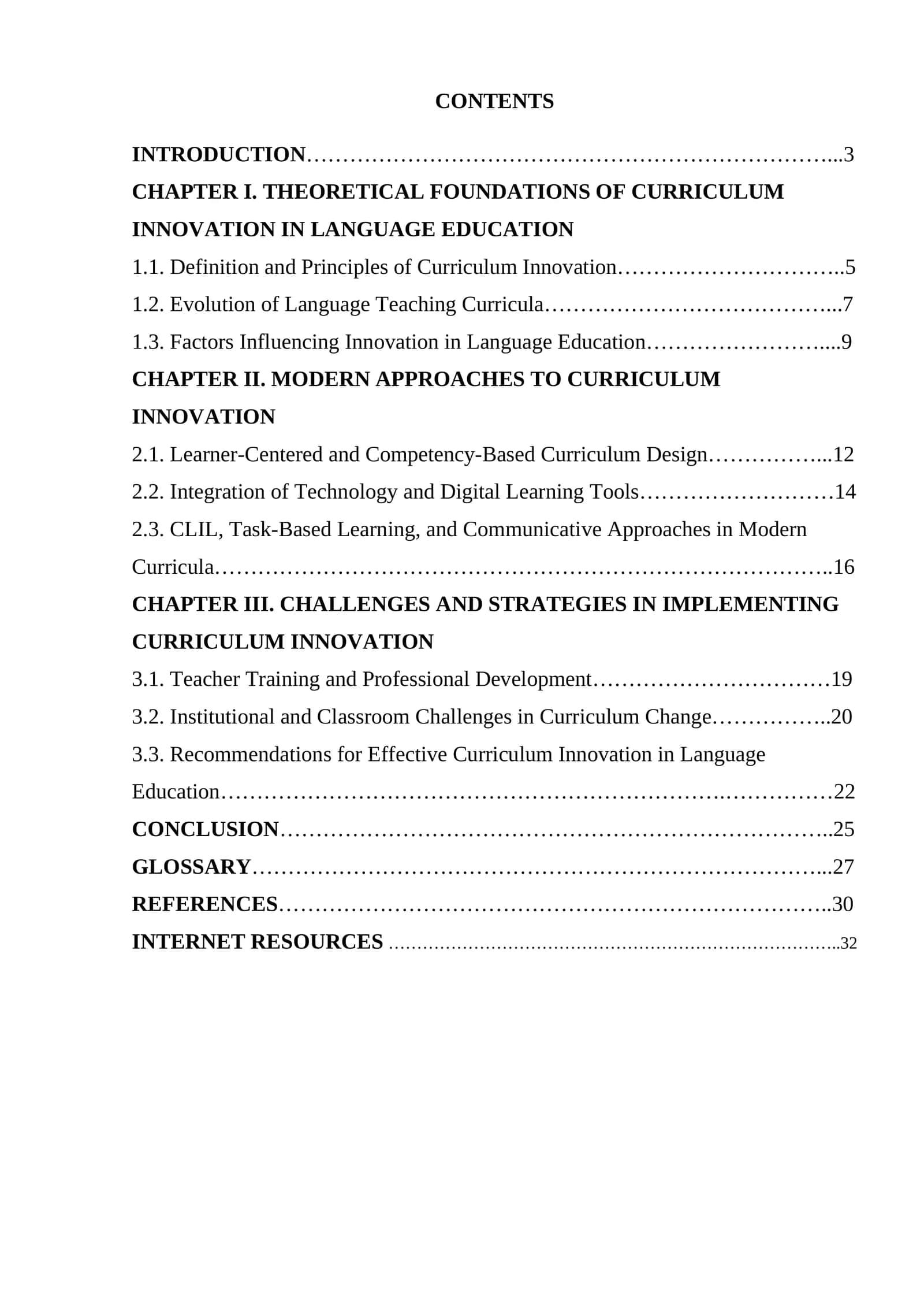
CONTENTS INTRODUCTION…………………………………………………………........................................3 CHAPTER I. THEORETICAL FOUNDATIONS OF CURRICULUM INNOVATION IN LANGUAGE EDUCATION……………………………………………………………………………………6 1.1. Definition and Principles of Curriculum Innovation……………………………………….6 1.2. Evolution of Language Teaching Curricula………………………………………….………….7 1.3. Factors Influencing Innovation in Language Education………………………… ……….9 CHAPTER II. MODERN APPROACHES TO CURRICULUM INNOVATION…………………………………………………………………………………… …………….. 12 2.1. Learner-Centered and Competency-Based Curriculum Design…………………….12 2.2. Integration of Technology and Digital Learning Tools………………… ……………….13 2.3. CLIL, Task-Based Learning, and Communicative Approaches in Modern Curricula……………………………………………………………………………………………………………..15 CHAPTER III. CHALLENGES AND STRATEGIES IN IMPLEMENTING CURRICULUM INNOVATION …………………………………………………………………………………………………….. 18 3.1. Teacher Training and Professional Development……………………………………..….18 3.2. Institutional and Classroom Challenges in Curriculum Change.......................19 3.3. Recommendations for Effective Curriculum Innovation in Language Education……………………………………………………………………………………………………………21 CONCLUSION………………………………………………………………………………………………….24 GLOSSARY…………………………………………………………………………………………………….…26 REFERENCES……………………………………………………………………………………………………29 The Internet Resources…………………………………….....……………………………………31 INTRODUCTION The actuality and importance of the theme. The Resolution of the President of the Republic of Uzbekistan No. PQ-5117 dated May 19, 2021, “On measures to bring the popularization of foreign language learning in the Republic of Uzbekistan to a qualitatively new level” serves as the legal basis for a radical reform of the language teaching system in our country [1] . Ensuring the implementation of this resolution and raising the teaching of foreign languages to international standards directly requires revising the curriculum based on innovative approaches. In today’s age of globalization and digital technologies, static programs based on traditional textbooks no longer meet the requirements of the time. The introduction of innovative curricula in language education is a fundamental basis not only for imparting knowledge but also for developing students’ communicative competence, critical thinking, and independent learning skills. Therefore, the issue of integrating new pedagogical technologies, digital tools, and student-centered methods into the design of curricula is becoming increasingly important to ensure the competitiveness of human capital. The purpose of the course paper. The purpose of the course work is to identify effective models of curriculum innovation in language education, analyze the institutional and practical problems of their implementation, and develop methodological recommendations aimed at improving the quality of language education. The object of the study. The main object of the course work is the pedagogical process of teaching foreign languages within modern educational institutions and its formal curriculum software. The subject of the study. The subject of the study encompasses the theoretical foundations, core principles of curriculum innovation in language education, digital integration methods, and strategic implementation frameworks in educational practice. The hypothesis of the course work. If curriculum design transitions from text-heavy, static structures to an innovative framework that integrates digital tools, Task-Based Learning (TBL), and formative assessment, then it will significantly bridge the gap between classroom theory and real-world communicative competence among language learners. The structure of the course work. The structure of the course work consists of an introduction, three chapters (the first devoted to the theoretical foundations and the evolution of language programs, and the second and third focusing on practical analysis, pedagogical methods, and implementation challenges), a conclusion, a glossary, and references. [1] Decision PQ-5117 dated May 19, 2021 of the President of the Republic of Uzbekistan “On measures to bring the activity of popularizing the study of foreign languages to a qualitatively new level in the Republic of Uzbekistan”
Muallif

- Hujjatlari
- 854
- Sotilgan
- 305